
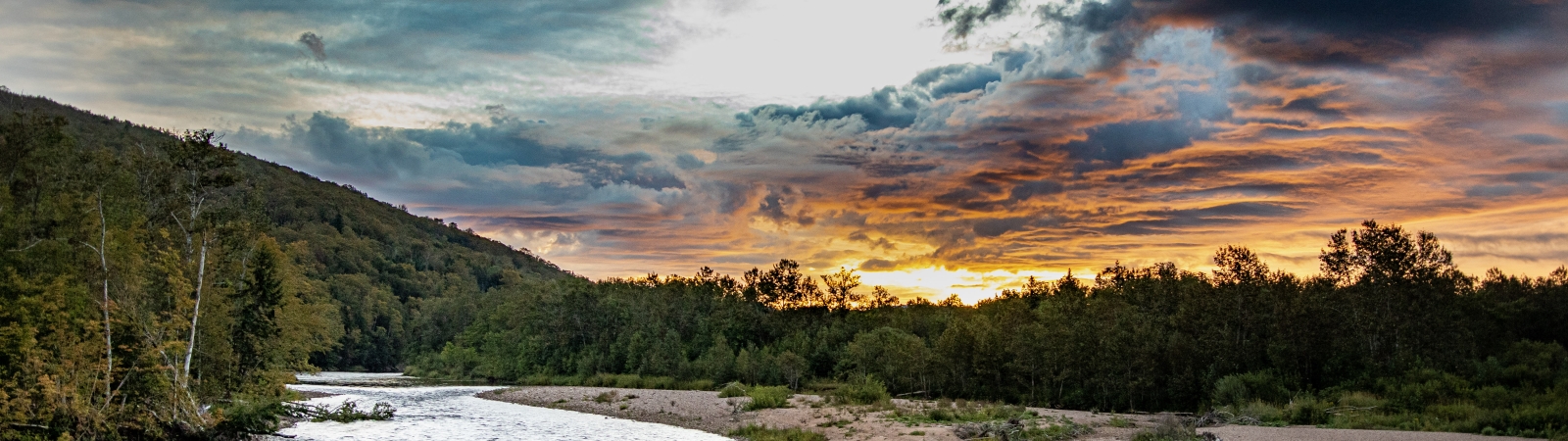
Healthy, thriving ecosystems are vital for our environment, economy and quality of life. Parks and protected areas are home to countless wildlife species and diverse plant life, including endangered species. They also provide clean air, clean water and beautiful natural spaces for both outdoor adventure and quiet reflection.
Nova Scotians remain very supportive of protecting more wilderness, but government progress has been slow. We will continue to advocate for the provincial and federal governments to succeed in meeting these important commitments.
Land Protection Goals
Land Protection Goals
Provincial Commitment
Legally protect at least 20 per cent of land and water mass in Nova Scotia by 2030.
In 2021, the Houston government passed the Environmental Goals and Climate Change Reduction Act, which legislated the government’s commitment to permanently protect at least 20 per cent of our lands and water by 2030. This commitment is important and achievable, but progress since 2023 has been painfully slow.
Federal Commitment
Protect 30 per cent of Canada's lands and oceans by 2030.
To help stem the precipitous decline of biodiversity, Canada — along with 195 other countries — committed to legally protecting at least 30 per cent of the country’s lands and oceans by the end of 2030. This is part of an international treaty called the Convention on Biological Diversity.
Path to Success for Nova Scotia
Path to Success for Nova Scotia
Expanding the province’s network of parks and protected areas would protect wildlife, old-growth forests, healthy watersheds and more. Nova Scotia can do this by designating (legally protecting):
- The dozens of sites remaining from the 2013 Parks and Protected Areas Plan
- Community-proposed protected areas across the province
- Indigenous Protected and Conserved Areas (IPCAs) in collaboration with Mi’kmaq Rights Holders
- The remaining sites purchased through the Canada-Nova Scotia Nature Agreement funding
Other lands contribute to our collective protected areas goal too, including land trust conservation lands and National Parks.
Top Sites Proposed for Protection in HRM
Top Sites Proposed for Protection in HRM
Blue Mountain Birch Cove Lakes
Made up of native Acadian/Wabanaki forests, wetlands, and an interconnected system of headwater lakes, this urban wilderness offers an exceptional experience for residents and visitors. It was one of four sites shortlisted across Canada for potential designation as a National Urban Park. Read more about Blue Mountain - Birch Cove Lakes here.
Sandy Lake – Sackville River Regional Park
Covering approximately 2,800 acres of land and water, this diverse landscape has long been considered unique. It offers habitat connectivity and a wildlife corridor, hosts an outstanding number of birds species, and is ideally located to provide easy access to nature for residents and visitors. This area requires protection to allow it to thrive as a wild space. Read more about the campaign to save the Sandy Lake – Sackville area here.
Halifax Backlands
This area encompasses close to 1,350 hectares of a rare ecosystem that is the key to securing urban green spaces in Halifax Regional Municipality. Protecting the remaining part of the site is an investment in water quality and recreational opportunities. Read more here.
- The proposed Ingram River Wilderness Area
The proposed Ingram River Wilderness Area is home to the oldest known forest in the Maritimes, at least 17 Species at Risk and an additional 78 Species of Conservation Concern. It supports breeding Atlantic salmon and has been identified by the provincial government as “core habitat” for the endangered Mainland Moose. Read more here.
By working with the community, engaging in the regional planning process, and delivering educational initiatives, the EAC is making its voice heard and its research count.
Priority Sites Across Nova Scotia
Priority Sites Across Nova Scotia
The Ecology Action Centre is calling on the provincial government to study and protect the following sites across Nova Scotia:
- Proposed Baddeck River Wilderness Area Addition (Victoria County)
- Proposed Beals Brook Wilderness Area (Annapolis County)
- Proposed Big LaHave Lake Wilderness Area (Annapolis County)
- Proposed Boggy Lake – Liscomb River Connector Wilderness Area (Guysborough County)
- Proposed Calvary River Wilderness Area Additions (Colchester County)
- Proposed Chain Lakes Wilderness Area (Kings County)
- Proposed Economy River Wilderness Area Additions (Colchester County)
- Proposed Fourchu Coast Wilderness Area Addition (Richmond County)
- Proposed Goldsmith Lake Wilderness Area (Annapolis County)
- Proposed Guysborough Headlands Wilderness Area Additions (Guysborough County)
- Proposed Ingram River Wilderness Area (Halifax and Hants Counties)
- Proposed Lambs Lake Wilderness Area (Annapolis County)
- Proposed Little Bear Lake Wilderness Area (Annapolis County)
- Proposed Marsh Lake Nature Reserve (Halifax County)
- Proposed Medway Lakes Wilderness Area addition (Annapolis County)
- Proposed Minamkeak Lake Wilderness Area (Lunenburg County)
- Proposed Nine Mile Woods Wilderness Area Expansion (Guysborough County)
- Proposed Portapique River Wilderness Area additions (Colchester and Cumberland Counties)
- Proposed Rockypoint Lake Wilderness Area (Digby County)
- Proposed Shatter Lake Wilderness Area (Colchester County)
- Proposed Shubenacadie/Grand Lake Wilderness Area (Halifax County)
- Proposed Toadfish Lakes Wilderness Area Addition (Guysborough County)
- Proposed Trout Brook Wilderness Area Addition (Inverness County)
Learn more about these and other community-proposed protected areas on the interactive map the Ecology Action Centre created in partnership with the Healthy Forest Coalition.
Resources
Resources
- Interactive map of community-proposed protected areas
- Nova Scotia’s Collaborative Protected Areas Strategy
- Ecology Action Centre’s Submission to the 2023 Collaborative Protected Areas Strategy
- Indigenous Protected and Conserved Areas
- Government map of the current parks and protected areas network
- Ecology Action Centre’s submission to the Spring 2026 Protected Areas Consultation
- Explainers on OECMs (Other Effective Area-Based Conservation Measures):
- The EAC's statement on A Force of Nature: Canada's Strategy to Protect Nature