
Show your support for 30-metre coastal buffers by Aug. 21!
Last year, even after HRM Council voted to accept the updated Regional Plan, the Houston government threw the plan out entirely.
Why? Because private developers didn’t like two new policies updating a 20-metre buffer to 30 metres in order to protect coastal ecosystems, as well as watercourses and wetlands, from new developments.
But right now, we have an opportunity to take the first step in fixing this. Councillor Nancy Hartling has put forward a notice of motion to amend the Regional Plan to include 30-metre buffers for coastal ecosystems – and developers are backing off!
This should be an easy win, but to make sure it happens, the rest of Council needs to hear public support for this motion.
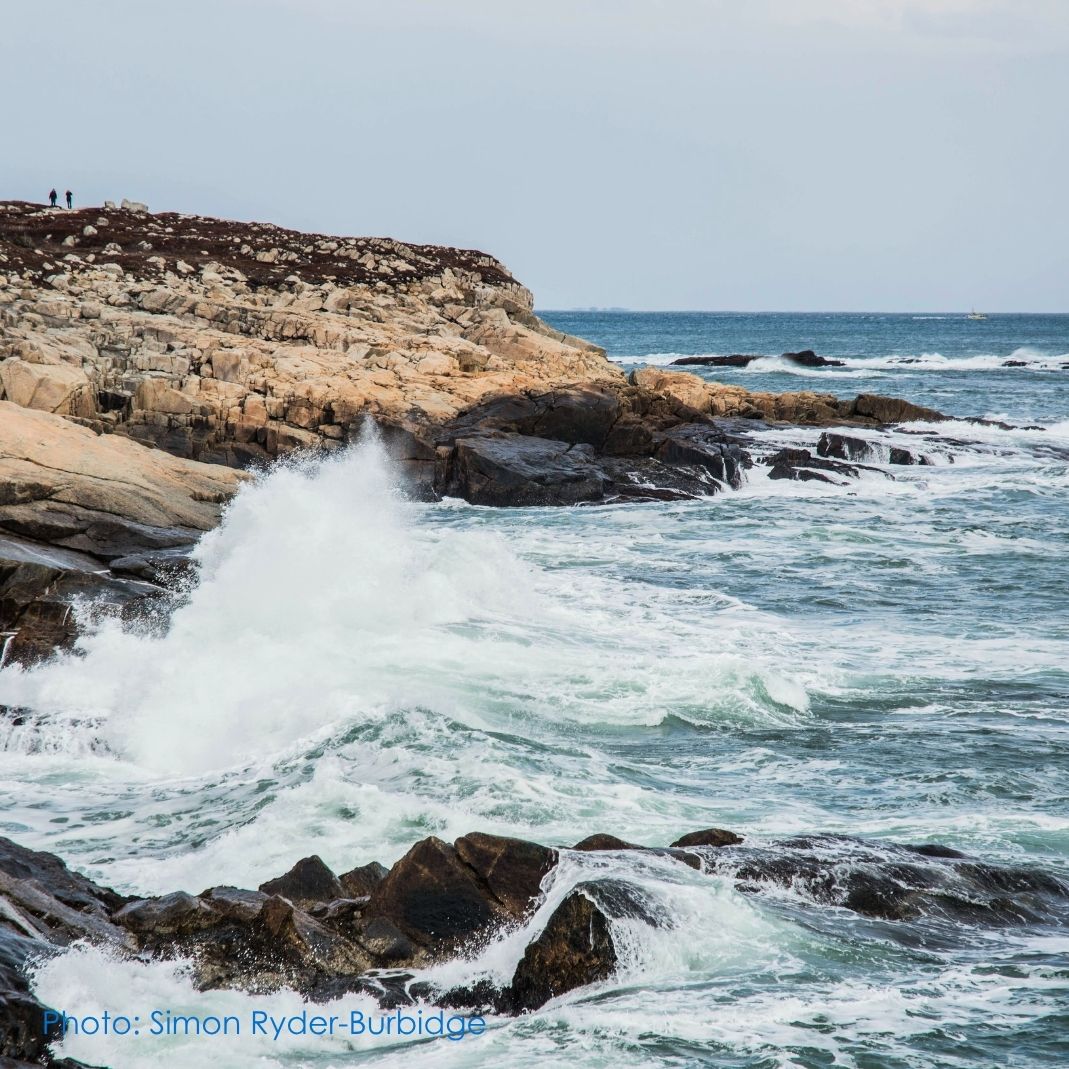
You can help by writing to your councillor (copy clerks@halifax.ca), urging them to vote in favour of protecting our coastlines!
Click here to find your councillor’s contact info, and see below for more details and background.
How to Take Action
Between now and Aug. 21, when the next Regional Council Meeting Agenda is published, we encourage you to email your municipal councillor and urge them to vote in favour of taking action on coastal protection in HRM!
Why should you write before August 21?
1) It ensures that this motion will appear before Council on Aug. 25, meaning coastal protection doesn’t get pushed further down the line to a future meeting.
2) It will let your councillor know that coastal action is an important issue to you and your community, and that you support stronger coastal protections in HRM.
You can find your local councillor here.
Always CC the Clerks Office at clerks@halifax.ca so your email is a part of public record.
Key Points to Consider for your Letter
Why do coastal buffers matter?
- Coasts are important for our local wildlife and environment.
Coastal species are deeply impacted by habitat loss from coastal development and climate-related disasters and events. This buffer helps reduce habitat loss and resource scarcity for native plants and animals.
- Coasts are important for community safety and resilience.
As we continue to face the effects of the climate crisis, coastal flooding, storms and erosion are worsening in frequency and severity. Buffering our coasts will protect land and infrastructure for private and public spaces, and will help keep our communities safer and more resilient to the impacts of climate change.
- This policy is important for our democracy.
When the Coastal Protection Act was thrown out by the Houston government, they told municipalities to create policies and plans to protect our coastal lands. This increase to a 30m buffer is a key way for our municipality to take coastal action. By rejecting HRM’s attempt to enact this policy, the Houston government is not letting us do the coastal protection work they ordered us to do ourselves!
If we value democratic process, this makes no sense. We need our Regional Council to push back and stand up for our municipality’s coastal protection!
- Coasts are connected to inland water systems.
We’re excited about this opportunity to implement strong coastal buffers in our municipality. However, we acknowledge the interconnectedness of coastal areas to our inland watercourses and wetlands. If we want our conservation efforts to have a lasting impact, we must take a holistic approach. While this moment is specifically about the 30m buffer increase for coasts, know that our communities still expect to see effective policy passed for the protection of wetlands and watercourses, and we will continue advocating for this policy change.
These two buffer increases, one for coasts and one for wetlands and watercourses, should be separated in policy ONLY. Research efforts should continue to explore the potential impacts of these buffers within a connected system.
Background
What’s Happening
At the last Regional Council Meeting (July 14), Councillor Hartling put a notice of motion forward, stating that at a future council meeting she will be requesting Regional Council take action on getting our municipal coastal buffers increased from 20m to 30m. This would only be possible through an amendment to the Regional Plan, which must be approved by the Minister of Municipal Affairs.
The History
This is not the first time Council has tried to get the coastal buffer increased to 30m through policy. In June 2025, the Regional Plan — a policy document that governs how development is done throughout all of HRM — underwent an update that included this policy change and was approved by Council. However, because of pushback from the development industry, the Minister of Municipal Affairs (then Minister Lohr, now Minister MacDonald) rejected the Regional Plan, and therefore these policies were not adopted. Minister Lohr published a letter that claimed this 30m coastal buffer increase, along with the same buffer increase for wetlands and watercourses and a small group of other environmental policies, ran the risk of “impeding development.” No evidence of where or how was shown.
In October 2025, the Urban Development Institute NS (UDINS), which acts in the interest of the province’s development industry, sent HRM a letter revoking its previous pushback on the 30m buffer increase for coasts only. UDINS did not change its stance on the 30m buffer for wetlands and water courses.
Since the development industry’s concern for their ability to develop led to the rejection of the 30m buffer for coasts in the first place, there should no longer be any reason to deny this policy change. HRM should be able to move forward with the 30m buffer increase for coasts without provincial or industry pushback. We need our community to speak up to make sure this happens!
A Note on Wetlands
A policy that would increase wetland and watercourse buffers from 20m to 30m was also recommended in the June 2025 version of the Regional Plan. Although it was approved by Council, with enthusiastic community support, this policy suffered the initial same fate as the coastal buffer increase.
Inland wetlands and watercourses are vital. They provide critical habitat with specific nourishment and resources for our local species. If properly managed, such as with appropriate development buffers, they keep our communities safe and resilient to floods, and act as natural fire breaks. The health of our freshwater is also tied to the health of our communities. And importantly, wetlands and watercourses are deeply connected to our coasts — all inland water eventually makes its way back out to our oceans.
However, the increase to a 30m buffer for wetlands and watercourses still faces opposition from the development industry. We know this is frustrating, and we are frustrated alongside you. When we advocate for the 30m buffer increase for coasts, we do so knowing that it is an incomplete picture.
But, during a challenging time for environmental rights, this fight is an important opportunity to move the needle on addressing the climate crisis. Now is a moment to protect our coasts, and we must act fast.