Building a Thriving Kelp Seafarming Sector in Mi’kma'ki / Atlantic Canada
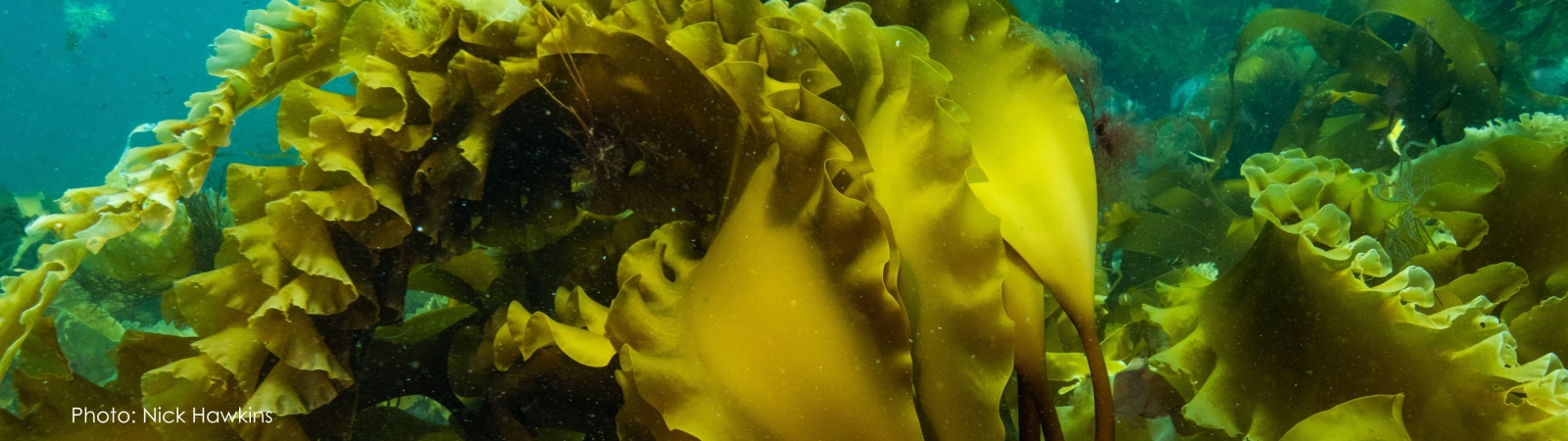
Seafarming kelp seaweeds can be a good opportunity for sustainable ocean work in coastal communities. Kelp seafarms provide sustainable food and material to replace carbon-intensive products like petroleum-based fertilizers and plastics, with low impact on the ecosystem while growing.
Our Kelp Kurious hub supports the emerging kelp sector by working with farmers, entrepreneurs, researchers, regulators and communities to determine what a thriving, sustainable sector looks like here in Mi’kma'ki / Atlantic Canada.
How we cultivate our kelp
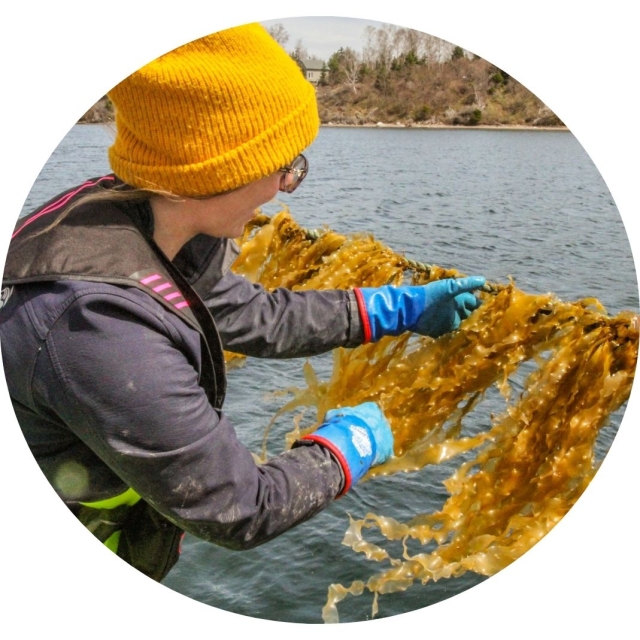
The project’s land-based kelp seedling nursery near Mahone Bay, Nova Scotia, is where we test ways to grow quality seedlings at a low cost. The Kelp Kurious team transfers the seedlings to the Indian Point Marine Farms site nearby to grow alongside their scallops and mussels. Come harvest time, the project’s kelp is available to processors and businesses developing kelp-based products.
Watch the process from spore to harvest in our YouTube video!
And watch this episode of CBC's Land & Sea for more details on how it all works:
More About the Kelp Kurious Project
Our sugar kelp and horsetail kelp are being used by a variety of entrepreneurs and chefs to test products across a range of sectors including food, biomaterials, soil amendments and as ingredients in personal care products.
We also welcome research partners to the project for hands-on trials focused on environmental conditions, optimizing growth and farming methods. And we work with economists, investors and product developers to explore market potential and make analyses available to all.
A core part of Kelp Kurious is helping people navigate the many regulations and permits needed for seafarming and product development. We advocate for “right-sized” regulations that ensure strong environmental protections are in place while enabling small-scale farmers and businesses to get started in this emerging industry.
Are you Kurious about Kelp?
If you're curious about kelp and new to the sector, get started by signing up for the Kelp Kurious mailing list to be notified about upcoming trainings, Kelp 101 sessions and other events and resources.
FAQ
Here are some commonly asked questions we get about kelp seafarming.
Why kelp seafarming?
Why kelp seafarming?
Seaweeds have been harvested and used for millennia in Mi’kma'ki for food, fertilizer, insulation and around the world to extract useful components like agar, alginate and carrageenan. When overharvesting of local wild populations became an issue in the 1980s, Nova Scotian researchers played a pivotal role in starting seaweed cultivation to protect wild seaweed beds and for more quality and product control. Right here in Atlantic Canada, Acadian Seaplants was a pioneer in land-based seaweed farming and is still one of the largest seaweed companies in the world.
Farming native kelp species, a type of seaweed, is much newer to Atlantic Canada. There is growing interest in kelp as a fit for low-impact ocean livelihoods in coastal communities; as an addition to mussel, scallop, or oyster farming; and as a source of material for a wide variety of sustainable products. Sugar kelp (Saccharina latissima) has been the main focus of ocean farming in Atlantic Canada, but some farmers have been successful with horsetail/oarweed kelp (Laminaria digitata) and winged kelp (Alaria esculenta). All are native to our coasts and suitable for our ecosystem, are relatively easy and low cost to grow, have a foundation of research behind them and each offers some unique nutrient and extract profiles that differ from other seaweeds.
Can I grow kelp?
Can I grow kelp?
Kelp seafarming is aquaculture. You will need a lease/licence from your provincial government. The application process and regulations vary by province in Atlantic Canada; for a new seafarm site, the process can take 1-3 years. There are also options to transfer an existing farm site, apply as part of a special aquaculture area or add kelp as a species to an existing farm. All have different application processes.
Check with N.S, N.B, N.L. or P.E.I. for specific requirements. Stay tuned for a jurisdiction overview report we are releasing soon.
Where can I buy kelp in Atlantic Canada?
Where can I buy kelp in Atlantic Canada?
You can buy fresh kelp from Kelp Kurious during our harvest months of May and June. Small batches of dried kelp may be available if pre-ordered.
There are more new kelp farms starting every year in the region. If you are an interested buyer or product developer – get in touch. We keep track of other farms that are producing kelp in Atlantic Canada. Alternatively, you can see options on Greenwave’s Seaweed Source. We are also working with interested kelp farmers and product developers to explore a processing co-op in Nova Scotia.
What does kelp taste like and how can I cook it?
What does kelp taste like and how can I cook it?
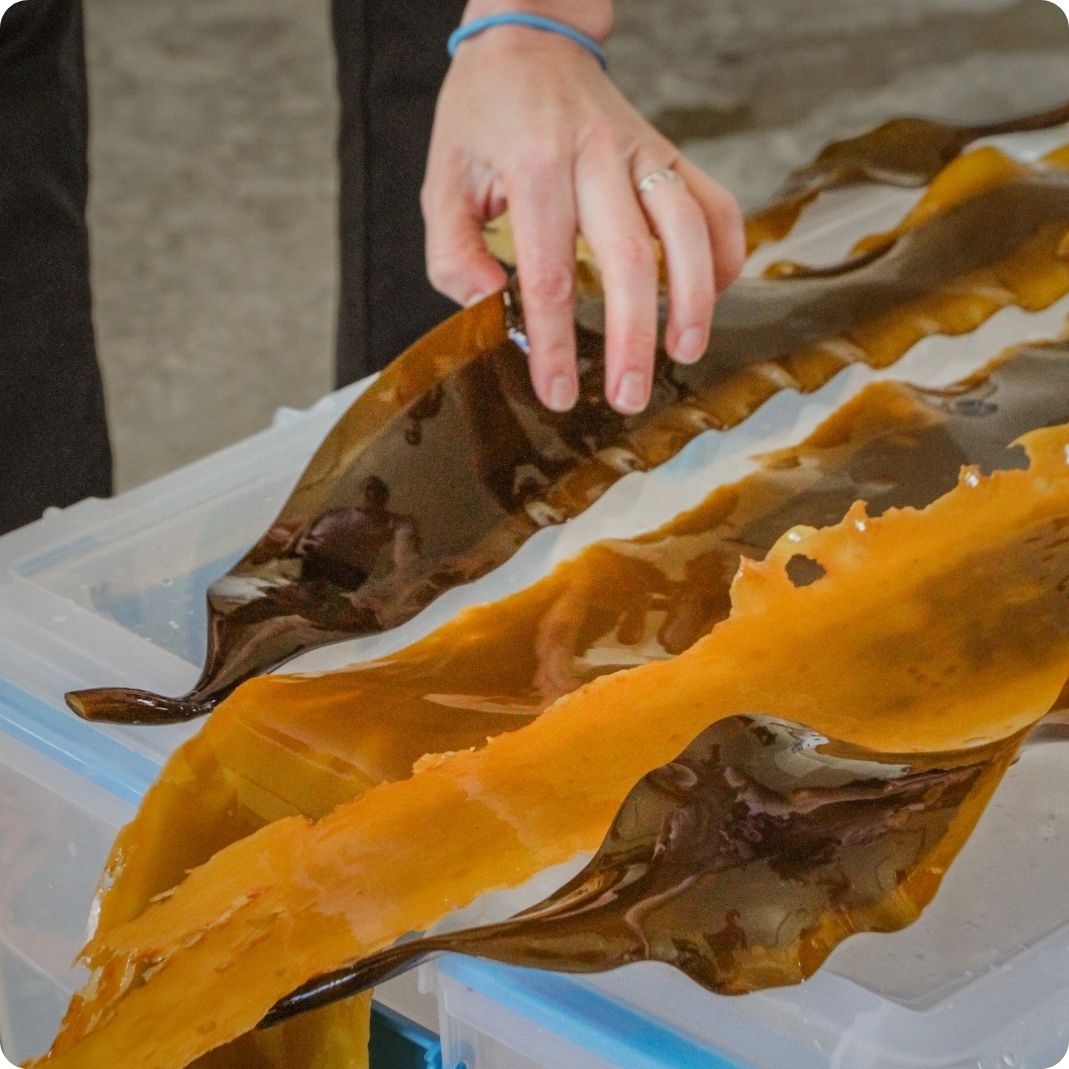
Kelp has a subtle umami flavour and can be used in soups, salads, baking, pasta, and more! Check out our Cooking with Kelp videos on our Instagram! For more information on post-harvest handling for food uses, check out our Post-Harvest Handling Guide for Cultivated Kelp in Nova Scotia.
Is kelp a good crop to grow alongside shellfish like oysters, scallops or mussels?
Is kelp a good crop to grow alongside shellfish like oysters, scallops or mussels?
Yes! Kelp is an excellent crop to add to your shellfish farm. The gear and set up for kelp seafarming are very similar to those used in many shellfish seafarms. Better yet, kelp does not compete for nutrients; in fact, it thrives on the nitrates released by growing shellfish, and it grows over the winter and early spring months, the off season of many shellfish seafarms. This multi-species approach to seafarming reduces costs and provides multiple streams of income.
How do I get kelp?
How do I get seedlings?
You can either start your own kelp seedling nursery or purchase seedlings from a commercial seedling nursery.
What is the season for growing kelp in Atlantic Canada?
What is the season for growing kelp in Atlantic Canada?
Kelp is a cold-weather, seasonal crop that reproduces in the fall, is farmed over winter and is harvested in spring.
Is there a market for kelp?
Is there a market for kelp?
The market for cultivated kelp in Atlantic Canada is still developing. Kelp Kurious is supporting market development with research and supporting product developers to generate demand for farmed kelp as more farmers start growing over the next couple of years. Here are some places where kelp is already being used or trialed in Atlantic Canada:
- We have distributed our kelp to 25 restaurants, with a number of them now including kelp on their menus permanently.
- We have worked with dozens of businesses developing a wide variety of products, including skin care and wellness, bioplastics, soil supplements and fertilizers, pet food and market-ready food, spices and treats, some of which are getting to commercialization stages and will be looking to source tons of kelp in the coming years.
- The Verschuren Centre, a leading commercialization accelerator in the bioeconomy space, is based in Nova Scotia and working with several companies to test extraction processes and develop kelp products.
Check out our Roadmap for Nova Scotia Kelp Farming for an analysis of potential market opportunities for kelp as an ingredient in food and personal care products. Developing farming and primary processing hubs in the region is key to realizing market opportunities. The project continues to produce additional sector viability analyses.
What should I consider about kelp farming taking place in waters near me?
What should I consider about kelp farming taking place in waters near me?
Anything we do in our ocean is going to have an impact on the ecosystem; however, the risk and impact of kelp farming is very limited. Since a small amount of seedlings can yield a high volume of kelp, you can grow a lot of kelp in a very small area. Most kelp and shellfish seafarms in Atlantic Canada are small, between 5 and 20 hectares, and just one hectare can yield 5000 lbs. of kelp. Farmed kelp grows down in the water from lines that are near the surface, so it does not touch the bottom. Only the anchors at the end of the lines touch the bottom and you will see buoys on the surface. Kelp farms create habitat for other creatures while growing and can uptake extra nitrogen that may enter the ocean from land use impacts.
Does growing kelp sequester carbon?
Does growing kelp sequester carbon?
Sequestering carbon means storing it away from the atmosphere for more than 100 years. Farming kelp or sinking large quantities of seaweed to the ocean floor is not a scientifically proven way to sequester carbon and is a high risk to ecosystems. Kelp absorbs carbon while it grows, like all plants and algae, but when it is harvested and processed, some of the carbon will be released back into the environment, just like when a tree is cut for use. While seaweeds grow they are also shedding organic matter and carbon is going back into the ocean and entering into the air-water-carbon exchange cycle as usual. This is the same for sinking seaweeds to the bottom of the ocean.
However, kelp products can benefit carbon emissions. When kelp is used in place of a high-carbon ingredient or product, like petroleum-based fertilizers, plastics, or feed supplements, there is a significant reduction in greenhouse gases. And kelp is a very good nutrient mitigator in the ocean – it sucks up nitrogen and phosphorus at scientifically measurable rates, in addition to acting as a water cleaner in ocean areas polluted by runoff from fertilizer and wastewater.